What Gate Options Are Available for Chain Link Fences?
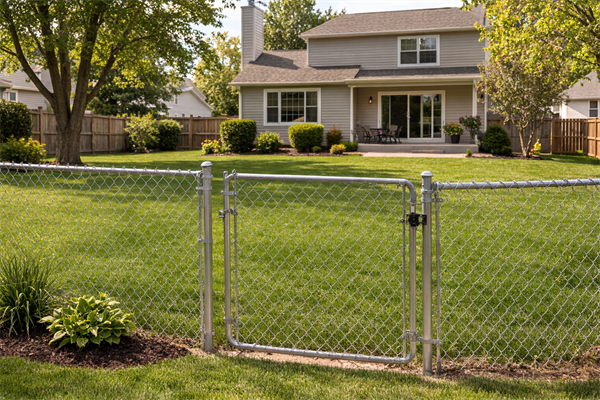
Chain link fences are widely used for residential, commercial, and recreational properties because they provide durable perimeter protection while remaining cost-effective and adaptable. An important part of any chain link fence system is the gate, which allows controlled entry and exit while maintaining the strength and function of the fence. Property owners often have several gate styles to choose from, each designed for different levels of traffic, security needs, and available space. Understanding these options helps determine which gate configuration works best for driveways, pedestrian access points, pool enclosures, or commercial entryways. Many chain link fence systems integrate gates designed specifically for these uses, such as those commonly installed with chain link fencing.
Selecting the right gate involves more than choosing a size. The movement style, automation capability, safety features, and security hardware all influence how well the gate performs over time. Sliding and swing gates operate differently depending on available clearance, while driveway gates can often be motorized for automated entry. Pool areas frequently require childproof latching systems, and gate widths vary significantly between residential and commercial installations. Security considerations also play a role when protecting properties from forced entry. The following sections explain these factors in detail to help property owners understand the gate options available for chain link fence systems.
What Gate Options Are Available for Chain Link Fences?
Chain link fencing is widely used because it provides durable perimeter security while remaining cost-effective and adaptable to many property types. A critical component of any chain link system is the gate. Gates allow controlled access for vehicles, pedestrians, equipment, and maintenance while maintaining the integrity of the fence line. Modern chain link gates are available in a range of configurations designed for residential yards, commercial facilities, athletic fields, construction sites, and secure perimeters.
Property owners often evaluate gate styles based on how frequently the gate will be used, the type of traffic passing through, the available space near the opening, and the level of security required. For example, driveway access, equipment access, and pedestrian entry all require different gate designs. Many chain link systems also integrate safety features, automation options, and specialized locking mechanisms. When exploring gate systems used with chain link fencing, it helps to understand how each option works and where it performs best.
Several factors influence gate selection, including operational style, automation capability, safety requirements, gate width, and security measures. The sections below explain how different gate types function and what property owners should know before selecting a system.
What’s the Difference Between Sliding and Swing Gates?
Sliding gates and swing gates represent the two primary movement styles used with chain link fencing. The main difference between them lies in how the gate opens and how much space is required for operation.
Swing gates operate similarly to a standard door. Hinges mounted to gate posts allow the gate to open inward or outward. Single-leaf swing gates are common for pedestrian access, while double-leaf swing gates are frequently used for driveway openings. Swing gates are mechanically simple, making them easy to install and maintain. Because they require clear space for the gate leaf to swing open, they are best suited for properties with adequate clearance inside or outside the fence line.
Sliding gates move horizontally along the fence line rather than swinging open. These gates operate on either a ground track or a cantilever system. Track-mounted sliding gates roll along a rail installed at ground level, while cantilever gates hang from rollers and move without touching the ground. Sliding gates are commonly used in locations where space behind the gate is limited or where large openings are required.
Sliding gates also perform well in commercial or industrial environments where wider openings are necessary for trucks, equipment, or delivery vehicles. Because the gate moves parallel to the fence, it eliminates the clearance requirements associated with swing gates. Facilities that rely on vehicle access control often choose sliding systems paired with gate operators and access control devices. These designs are commonly integrated into chain link fencing installations that protect large parking areas, storage yards, or commercial entrances.
Can You Motorize a Chain Link Gate for Driveways?
Chain link driveway gates can be motorized through the use of gate operators designed for either swing or sliding gate systems. Gate automation is widely used in residential, commercial, and institutional settings to improve convenience and control access points.
Automatic gate operators function through electric motors that open and close the gate based on signals from access devices. These devices may include remote transmitters, keypad entry systems, vehicle detection loops, card readers, or smartphone-based access controls. The operator is mounted to the gate frame or gate post depending on the gate style. Swing gate operators typically use articulated arms or linear actuators, while sliding gate operators use a drive gear connected to a track system.
Driveway gate automation also requires safety components that comply with current safety standards. These include photo-eye sensors, edge sensors, and emergency manual release systems. Photo-eyes stop gate movement if a vehicle or person interrupts the beam, preventing accidental closure while the gate opening is occupied.
Motorized chain link gates are frequently used with residential properties seeking controlled driveway entry. They are also common in secure parking areas, gated communities, and commercial access points. In residential applications, automated gates are often installed alongside broader perimeter systems such as residential fencing to create controlled entry points that improve both privacy and security.
Are Childproof Locking Systems Available for Pool Areas?
Pool areas must meet specific safety standards to prevent unsupervised access by children. Many municipalities require fencing and gates that include child-resistant locking mechanisms. Chain link pool gates are commonly equipped with specialized latching systems designed to meet these safety requirements.
One widely used design is the self-closing, self-latching gate system. This configuration uses spring-loaded hinges that automatically close the gate after it is opened. The latch mechanism engages automatically when the gate returns to the closed position. Self-latching designs reduce the risk of gates being accidentally left open.
Childproof locking systems often position the latch mechanism higher on the gate frame so that small children cannot reach it from outside the enclosure. In many cases, the latch requires multiple actions or deliberate force to disengage, further reducing the likelihood of unintended access. Magnetic pool gate latches are also common because they maintain a consistent locking force and operate reliably in outdoor environments.
Additional safety features may include gate alarms that activate if the gate remains open for an extended period or if it is opened without authorization. These devices add another layer of protection in residential settings where pool safety is a priority. Pool gate systems built into chain link enclosures are designed to support these safety features while maintaining visibility and airflow around the pool area.
What Widths Are Standard for Residential vs. Commercial Gates?
Gate width varies significantly depending on the type of property and the expected traffic passing through the opening. Residential gates are generally designed for pedestrian access or standard vehicle driveways, while commercial gates must accommodate larger vehicles, equipment, and service access.
Residential pedestrian gates typically range between 3 and 4 feet wide. These widths allow comfortable passage for individuals, wheelbarrows, lawn equipment, and bicycles. Residential driveway gates are commonly built between 10 and 16 feet wide to accommodate standard passenger vehicles entering or exiting the property.
Commercial and industrial gates often require much wider openings. Vehicle entrances at warehouses, storage facilities, and industrial sites commonly range from 20 to 40 feet in width. These larger openings allow delivery trucks, construction vehicles, and trailers to pass through safely without risk of contact with the gate frame.
Large commercial gates frequently rely on sliding or cantilever designs because swing gates of that size require extensive clearance. Cantilever systems are particularly useful because they eliminate ground tracks that may interfere with heavy vehicle traffic or debris accumulation. The gate design and support posts must also be engineered to handle the weight and structural load associated with wider openings.
Choosing the Right Chain Link Gate for Your Property
Selecting the right gate for a chain link fence depends on several factors, including how the gate will be used, the level of security required, and the type of traffic entering the property. Sliding and swing gates offer different operational advantages depending on available space and the width of the opening. Automated driveway gates add convenience and access control, while specialized latching systems help improve safety around pool areas. Gate widths also vary significantly between residential and commercial installations, making it important to match the design to the intended application. Security hardware, reinforced frames, and proper installation all play a role in protecting a property from unauthorized entry.
Property owners who want guidance in selecting the right gate configuration can work with experienced fencing professionals who understand how gate systems integrate with a full perimeter design. FencIn Deck provides chain link fence installations, custom gate solutions, and access systems for residential and commercial properties throughout the region. Whether a property requires a sliding vehicle gate, a secure pool enclosure, or a reinforced access point, their team can help determine the appropriate configuration.
For more information about chain link fence gates or to discuss your project, call FenceIn Deck at 651-246-3176. You can also request a free estimate to learn more about available fence and gate options for your property.